AI Image Generators Compared: 2026 Edition
Midjourney v7, GPT Image 1.5, and Stable Diffusion 3.5 — strengths, pricing, and which to use when.
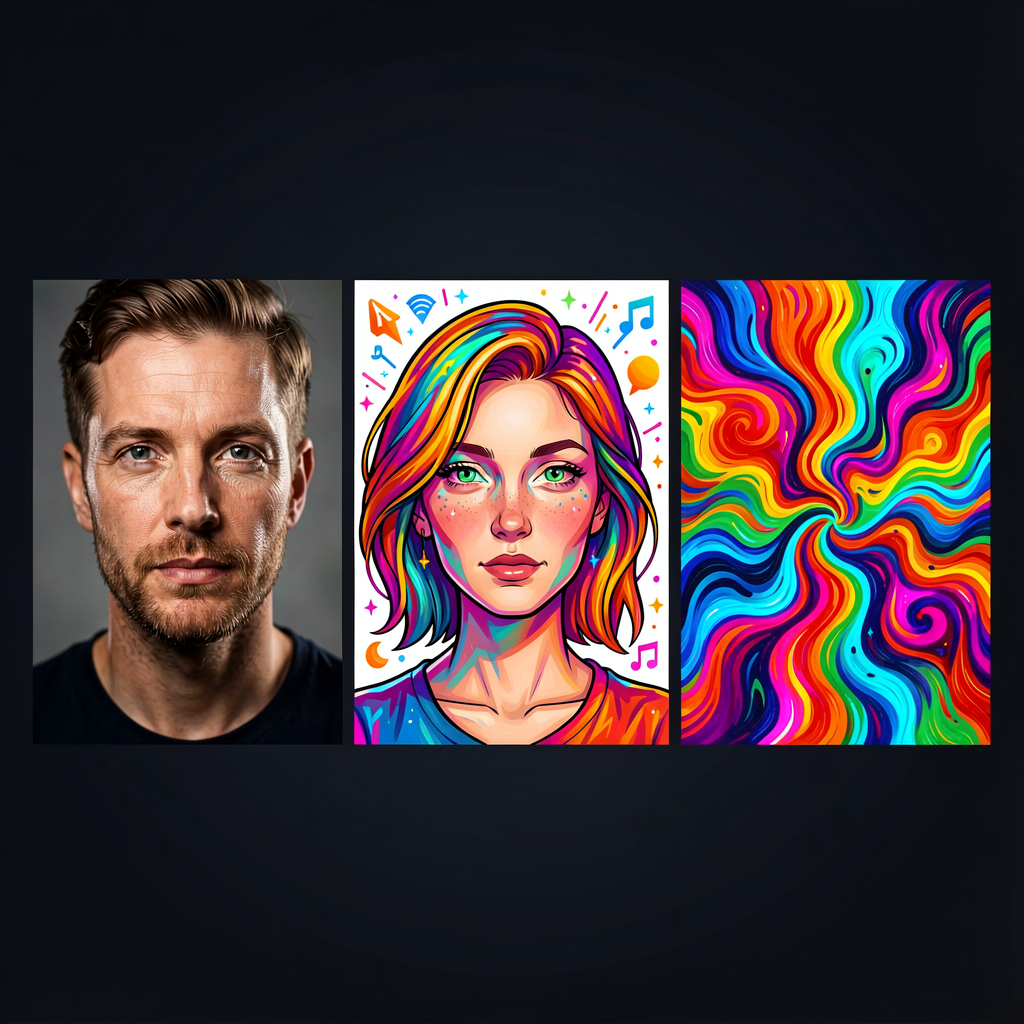
"A cat in a spacesuit drinking coffee on Mars" — type something absurd like that, and an actual image comes out. AI image generation has exploded since 2022, and by 2026 there are so many options that choosing one has become its own problem.
Short answer: no single tool does everything best. They each have different strengths.
The Big Three at a Glance
| Midjourney v7 | GPT Image 1.5 (ChatGPT) | Stable Diffusion 3.5 | |
|---|---|---|---|
| By | Midjourney, Inc. | OpenAI | Stability AI + community |
| Access | Web/Discord | Built into ChatGPT | Local install or web services |
| Pricing | $10–$120/mo | Included with ChatGPT sub | Free (local) |
| Strength | Aesthetic quality | Prompt understanding, text accuracy | Freedom, customization |
| Weakness | Text rendering | Not quite Midjourney-level aesthetics | High learning curve |
Midjourney v7 — Still the Best-Looking Output
The v7 release (April 2025) rebuilt the architecture from scratch. Results still look like art — that hasn't changed — but bad generations dropped significantly compared to previous versions. Composition, lighting, and color grading come out polished without heavy prompt engineering.
The web editor has matured significantly, bringing generative fill, inpainting, and outpainting to the browser. Video generation (V1, up to 21 seconds) is now supported, and Niji 7 (January 2026) strengthened the anime/illustration specialized mode.
The weak spot is text rendering inside images. Getting letters to appear correctly is still much better on GPT Image. And there's no free tier — you have to pay before you can try it.
Pricing runs Basic $10/month, Standard $30/month, Pro $60/month. Standard and above get unlimited relaxed mode, letting you queue non-urgent generations at slower speed.
GPT Image 1.5 (ChatGPT) — Most Convenient and Smartest
GPT Image 1.5 replaced DALL-E 3 in December 2025 and changed the game. It's not a separate image pipeline — it's natively integrated into ChatGPT as a multimodal model, which gives it prompt comprehension on a different level. It holds the #1 spot on LM Arena's image generation leaderboard with a top-ranking ELO score.
"Make the background darker," "add a tree on the right," "change the text to Spanish" — this kind of iterative natural-language refinement just works. Complex scenes with multiple elements, spatial relationships, and fine details are where it really separates itself from the pack.
Text rendering accuracy sits around 95%. Putting readable text in AI-generated images has been a longstanding weak point across the industry, but GPT Image handles it well — even for non-Latin scripts. This area is clearly ahead of Midjourney.
The trade-off: aesthetically, it's a step below Midjourney. Images are good, but they don't quite have that "gallery piece" feel Midjourney produces. Content policy is also stricter, limiting the range of images you can generate.
It's bundled with ChatGPT Plus ($20/month) and Pro ($200/month) subscriptions, so if you're already paying for ChatGPT, there's no extra cost. Worth noting: the legacy DALL-E 2/3 APIs are scheduled for shutdown in May 2026.
Stable Diffusion — Maximum Freedom
The open-source champion. Stable Diffusion 3.5 uses an 8.1 billion parameter Multimodal Diffusion Transformer architecture, pushing quality up another notch. Running locally is the big differentiator — if you have a GPU, you get unlimited free generation, plus full access to LoRA fine-tuning and ControlNet conditioning.
The FLUX ecosystem has emerged as a significant force alongside SD. Apache 2.0 licensed for commercial freedom, and FLUX.2 Klein can generate images in under one second. Civitai and similar platforms host thousands of community-built custom models based on SD and FLUX. This level of customization simply isn't possible with Midjourney or GPT Image.
Interfaces like ComfyUI and Automatic1111 let you build node-based workflows — chaining image generation → upscaling → background removal → style transfer into visual pipelines. Once you're comfortable with the setup, productivity gets high.
The catch: steep learning curve. Installation is involved (Python environment, CUDA setup, model downloads), and getting good results takes investment in prompt engineering and parameter tuning. Expecting beautiful images right after install will lead to disappointment.
If local setup feels like too much, cloud services like RunPod and Replicate let you run Stable Diffusion without your own hardware.
Recommendations by Use Case
Blog thumbnails, social media content — Midjourney v7 is the safe bet. Even rough prompts produce good-looking results, making it accessible for non-designers.
Iterative editing through conversation — GPT Image 1.5. The "fix this part" loop of revisions feels natural. Especially useful for images with text or presentation materials.
Bulk generation, custom styles — Stable Diffusion or FLUX. Generating hundreds of images in a specific style, or training on your own product images — nothing else comes close.
Quick prototype images for developers — GPT Image 1.5 wins on convenience. If you already use ChatGPT, no extra tools needed.
Speed-critical work — FLUX.2 Klein supports sub-second generation, and Google Imagen 4 Fast offers near-real-time output (~2-3 seconds).
Since each tool has distinct strengths, anyone seriously using AI image generation tends to combine two or more. Midjourney for the concept, Stable Diffusion/FLUX for variations, GPT Image for adding text — that kind of pipeline.
Regardless of which tool you use, "writing good prompts" determines the quality of results. Same as with text-based AI.